

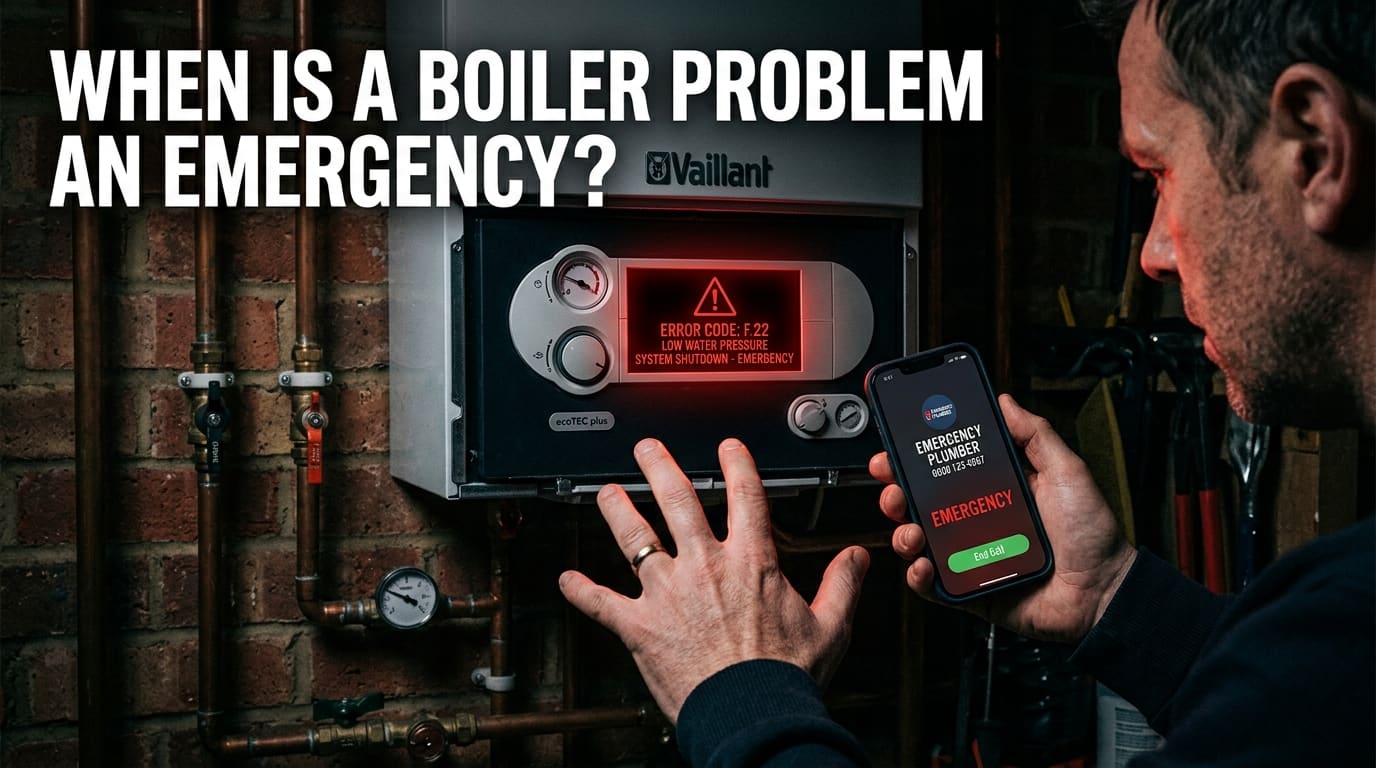

A boiler problem requires immediate emergency action when there is a suspected gas leak, a carbon monoxide alarm, fire or another immediate danger. Leave the affected area and contact the appropriate emergency service before arranging a boiler repair.
Other problems, such as lost heat or a water leak, may need urgent professional attention without requiring the same response. Their urgency depends on the conditions, the extent of the problem and the people affected.
Emergency boiler repair should follow any necessary safety response. An HVAC booking form is not a substitute for calling 911 or your gas utility when danger is suspected.
If You Smell Gas, Leave Immediately
If you smell an odor resembling rotten eggs or suspect a natural gas leak, do not remain near the boiler to investigate.
Leave the area and get others out. Avoid ignition sources and do not use a phone or other battery-operated equipment near the suspected leak.
From a safe distance, call 911 or your gas utility’s emergency number. For UGI Utilities customers, the gas emergency number is 800-276-2722. UGI advises moving at least the length of a football field away and not re-entering until its technician has inspected the building.
Do not try to relight a pilot, restart the boiler or locate the leak yourself. Do not delay evacuation to collect photographs, equipment details or belongings.
If a Carbon Monoxide Alarm Sounds, Get Outside
Carbon monoxide is colorless and odorless. The absence of a gas smell does not establish that the building is safe.
If a CO alarm sounds:
- Get everyone outside to fresh air immediately.
- Call 911 from outside.
- Follow emergency responders’ instructions.
- Do not return until responders say it is safe.
CDC guidance advises leaving immediately and calling 911 when a CO alarm sounds.
Do not silence the alarm and continue using the heating system. Finding and correcting the cause comes after everyone is safe.
Take Possible Carbon Monoxide Symptoms Seriously
Possible symptoms include headache, dizziness, weakness, nausea, chest pain and confusion. These symptoms can have other causes, so they cannot diagnose exposure by themselves.
If you suspect carbon monoxide exposure, get to fresh air and seek emergency medical help. Call 911, especially if someone is confused, collapses or has difficulty breathing. Do not stay inside to determine whether the boiler is responsible.
Tell responders about the suspected exposure and any alarm that sounded.
Fire, Smoke or an Immediate Electrical Hazard
If there is fire, significant smoke, active sparking or another immediate danger, leave the area and call 911.
Do not approach the boiler to operate controls, unplug equipment or collect information.
An unusual smell without visible fire still deserves attention. Describe it to a qualified professional from a safe location rather than opening covers or attempting to identify an internal fault.
Is a Boiler Water Leak an Emergency?
A water leak needs professional assessment, but its urgency varies.
A small, contained drip and rapidly spreading water present different situations. Water near electrical equipment, hot water discharge or steam can make approaching the area unsafe.
Keep people away from the affected equipment. Do not touch wet electrical components or enter standing water where an electrical hazard may exist.
Contact a qualified technician promptly and explain:
- Where the water is visible.
- Whether it is spreading.
- Whether hot water or steam is escaping.
- Whether nearby electrical equipment is affected.
- Whether heating has stopped.
Only make observations from a safe position. Do not remove covers or attempt to tighten boiler components.
If there is an immediate threat to life or safety, contact emergency services.
Does Losing Heat Require Emergency Boiler Repair?
Loss of heat can require urgent service, particularly during cold weather. However, it does not automatically indicate a gas leak or another immediate equipment danger.
Consider:
- Outdoor conditions.
- How cold the property is becoming.
- Whether infants, older adults or medically vulnerable people are affected.
- Whether there is a safe alternative place to stay.
- Whether the property can remain safely occupied while waiting.
Contact a heating professional and explain these circumstances when asking about availability. If the home cannot be kept safely warm, arrange a safer place to stay rather than relying only on a repair appointment.
Never use a gas oven to heat the home or operate fuel-burning equipment indoors that is intended for outdoor use. CDC warns about carbon monoxide risks during outages and loss of normal heating.
What About Banging, Whistling or Repeated Shutdowns?
Unusual noises and repeated shutdowns need diagnosis. A noise alone does not reveal the cause or establish the level of danger.
Describe what you noticed and whether it occurred alongside leaking, steam, smoke, odors or loss of heat.
Do not repeatedly reset a boiler that keeps shutting down. Avoid bypassing controls or attempting to keep it running despite a recurring fault.
If there is any immediate danger sign, follow the emergency guidance first. Otherwise, ask a qualified technician how soon the equipment should be assessed and whether it should remain unused until the visit.
Who Should You Call First?
| Situation | First action |
|---|---|
| Suspected natural gas leak | Evacuate and call the gas utility or 911 from a safe distance |
| Carbon monoxide alarm or suspected exposure | Get outside and call 911 |
| Fire or immediate danger | Leave and call 911 |
| Active leak without immediate danger | Keep clear and contact a qualified technician promptly |
| Lost heat in cold conditions | Request urgent assessment and arrange safe warmth |
| Recurring fault without immediate danger signs | Arrange professional diagnosis |
These examples do not establish that every unlisted problem is safe. If you cannot assess the situation safely, keep away and seek appropriate help.
What Information Helps When Booking a Repair?
Once any immediate safety concern has been addressed, useful booking information includes:
- The property address in Bethlehem or the surrounding service area.
- Whether the home has lost heat.
- The symptoms you observed.
- Any error code already visible.
- When the problem began.
- Whether an emergency responder or utility technician attended.
- Any instructions they gave about using the equipment.
Provide the boiler make and model only if you can obtain them safely. Do not go back into an unsafe area for this information.
For help arranging professional assessment, visit our boiler repair page for Bethlehem, PA.
Confirm What “Emergency Service” Means
When arranging urgent attendance, ask the contractor:
- When can someone attend?
- Does the company service this boiler type?
- Is there an additional attendance charge?
- Does the visit include diagnosis only or possible repair?
- What happens if replacement parts are needed?
An appointment does not guarantee immediate completion. The technician may need to assess the fault, obtain parts or recommend further work.
Do not restart equipment that emergency responders or the utility have instructed you to leave off.
Frequently Asked Questions
Should I call a boiler technician first if I smell gas?
No. Leave the area and contact your gas utility or 911 from a safe distance. Arrange repair after the immediate danger has been addressed.
Can carbon monoxide be present without a smell?
Yes. Carbon monoxide is odorless. A lack of odor does not rule it out.
Is every boiler leak an evacuation emergency?
Not every leak requires evacuation, but leaks need assessment. Keep away from hot discharge, steam and possible electrical hazards. Call emergency services if there is immediate danger.
Can I keep resetting a boiler until a technician arrives?
Do not repeatedly reset a recurring fault or bypass safety controls. Ask a qualified professional for advice appropriate to the equipment and symptoms.
Does an emergency visit guarantee a same-day repair?
No. Attendance, diagnosis and completed repair are separate stages. Confirm availability and ask how parts or additional work could affect completion.
Put Safety Before Troubleshooting
A suspected gas leak, carbon monoxide alarm or fire requires immediate action. Get to safety and contact the appropriate emergency service.
For other boiler problems, describe the symptoms to a qualified technician and explain any circumstances that make the loss of heating urgent.
For general heating and cooling service information, visit HVAC Bethlehem PA.
You may also find useful: Is an HVAC Problem an Emergency? A Homeowner Decision Chart · Why Is My Boiler Running but Not Heating the House? · What Causes a Boiler to Leak Water?